

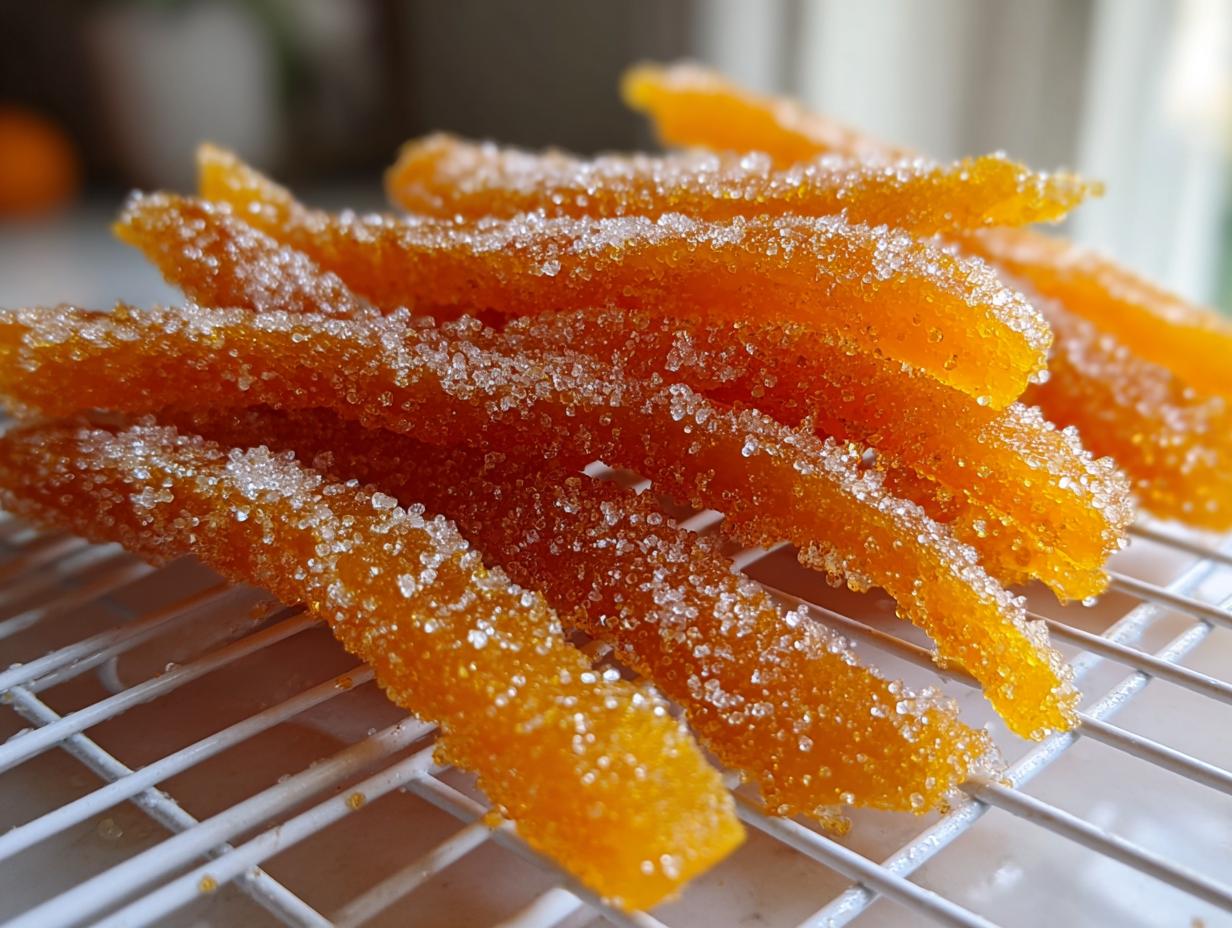
We all have those fruit bins where one sad, forgotten orange starts looking a bit tired. Maybe you think tossing the peel is the only option, but trust me, that’s where the real project management begins! At Dishicious, we’re all about maximizing every single ingredient we bring into the kitchen. Why waste perfectly good citrus zest when you can transform those tough rinds into something truly luxurious? This recipe for candied orange peel is shockingly simple. It takes that slightly intimidating process and boils it down to its most efficient core steps. Forget fussy techniques; this is the streamlined, foolproof method I use right here in Chicago to ensure we have high-end homemade citrus candy ready for gifting or dropping into a fancy cocktail. You’re going to love seeing those peels turn beautifully glassy!
- Why This Simple Method for Candied Orange Peel Works Every Time
- Essential Ingredients for Perfect Candied Orange Peel
- Step-by-Step Instructions to Make Candied Orange Peel
- Creative Ways to Use Your Homemade Candied Orange Peel
- Tips for Success When Making Candied Orange Peel
- Storage and Shelf Life of Sugar Coated Orange Peel
- Variations: Making Dried Citrus Slices and Other Candied Peels
- Frequently Asked Questions About Candied Orange Peel
- Nutritional Estimates for Candied Orange Peel
Why This Simple Method for Candied Orange Peel Works Every Time
When I approach a recipe, I see it as a system that needs optimization. Making candied orange peel used to sound complicated, but it’s really just about managing bitterness and moisture. This process strips away the guesswork. I promise, you don’t need years of pastry experience to nail this at home.
- We use technique, not luck, to cut the bitterness down significantly.
- The low-and-slow simmer creates that incredible, almost crystalline texture you see in fancy bakeries.
- It ensures you’re actually using what you already bought, which is just smart efficiency.
If you’re looking for reliable techniques that work the first time, check out how we handle our sugar cookie bars—same principle, maximum flavor payoff.
The Secret to Zero Bitterness in Your Candied Orange Peel
The white stuff under the skin? That’s the pith, and it’s where all the harsh bitterness lives. If you skip the pre-boiling, your final treat will taste aggressively like cleaning products—and nobody wants that! We boil the strips three separate times, draining them completely between each boil. This isn’t extra work; it’s strategic engineering to extract the unwanted compounds so only pure orange flavor remains. Trust me on the triple blanch; it’s non-negotiable for truly great homemade citrus candy.
Essential Ingredients for Perfect Candied Orange Peel
I keep my ingredient list short because, quite honestly, you don’t need much drama for this project. We’re relying on the strength of the orange flavor itself. You’ll need just three main components to guarantee success here. No fancy stabilizers or obscure extracts required at all!
- 3 large oranges (for peeling)
- 4 cups water, divided
- 3 cups granulated sugar, divided
- 1 cup water (specifically for the syrup)
Ingredient Notes and Substitutions
When you’re cutting the peel, really pay attention to not taking too much of the white pith. Too much pith means more bitterness, and we’ve already done the hard work blanching to avoid that mess! If possible, use organic oranges, especially since you’re eating the rind itself. And please, please save that leftover syrup! It’s basically liquid gold.
Step-by-Step Instructions to Make Candied Orange Peel
Okay, project time! We’re moving into the execution phase now. Don’t worry about the timing; just focus on the visual cues I’m giving you. If you follow these four key phases, you’ll end up with perfect fruit pieces. If you’re looking for another deep-fried project later, we’ve got an amazing apple fritter recipe that follows a similar logic of transforming humble ingredients.
Preparing and Blanching the Orange Peel Strips
First, wash those oranges really well—we’re eating the rind! Use a sharp knife to slice the peels into strips about a quarter-inch wide. Keep it consistent; this helps them cook evenly later. Now for the bitterness removal: toss the strips into a pot, cover them with 4 cups of cold water, and bring it to a hard boil. Dump that water out instantly. We repeat that boiling and draining two more times. That’s three times total! When you drain them the third time, you know you’ve successfully engineered out the unwanted flavors.
Simmering the Orange Peel for Translucency
Time to introduce the sugar and moisture. Put the blanched peels back in the pot with one cup of fresh water and one cup of sugar. Set the heat to medium and let it start a gentle simmer. This is where the transformation happens; we’re looking for the peels to turn translucent, which usually takes about 45 minutes. Just stir it occasionally so nothing sticks to the bottom. When they look like little stained-glass pieces, it’s time to move on.
Draining and Sugar Coating Your Candied Orange Peel
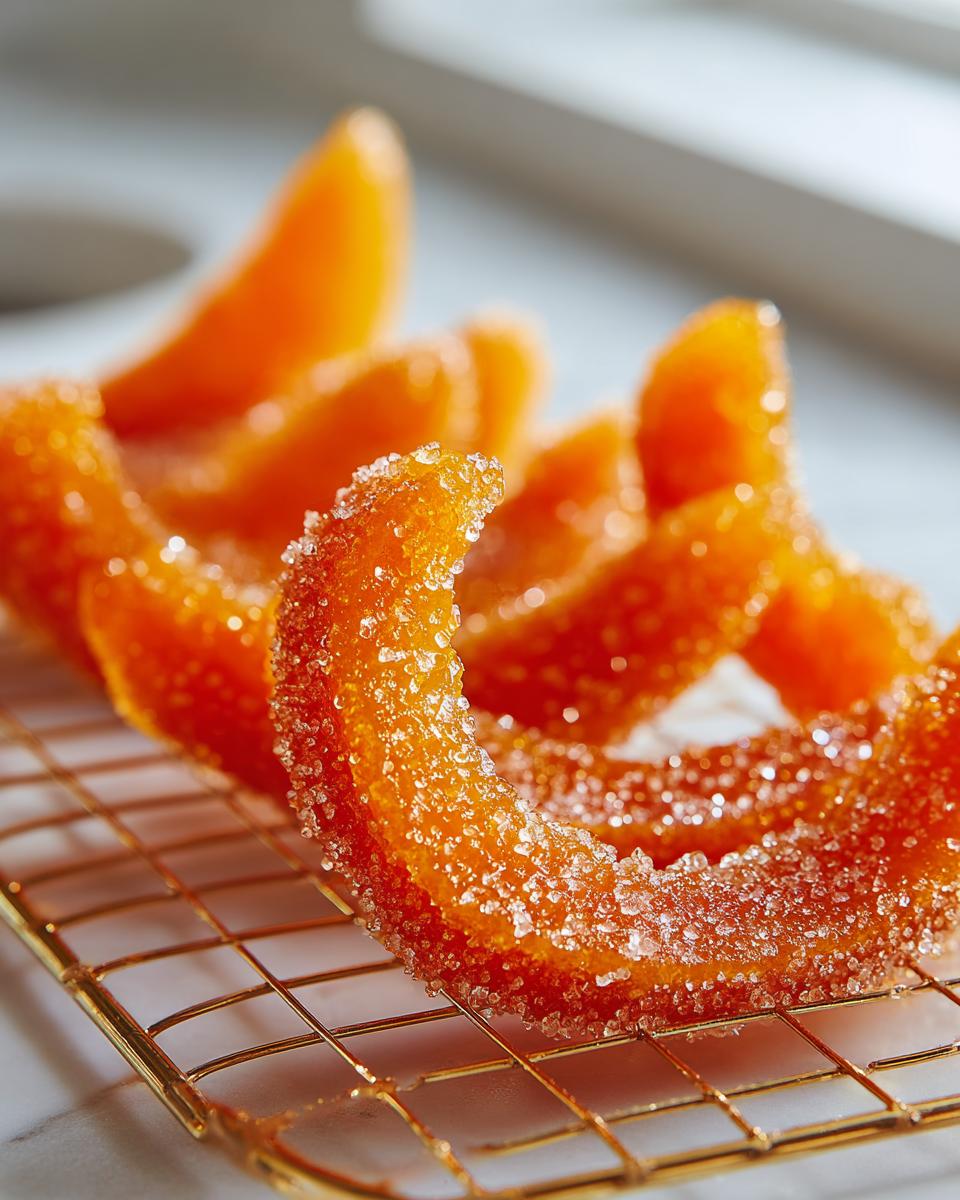
Carefully lift those gorgeous, sticky peels out using a slotted spoon and place them on a wire rack set over a baking sheet. You need patience here—let them drain for at least a full hour. This prevents the sugar coating from dissolving instantly. Once they aren’t dripping excessively, grab the remaining 2 cups of sugar and spread it flat on a shallow plate. Roll each sticky peel strip vigorously in the sugar until it’s completely covered.
The Final Dry Time for Perfect Candied Orange Peel
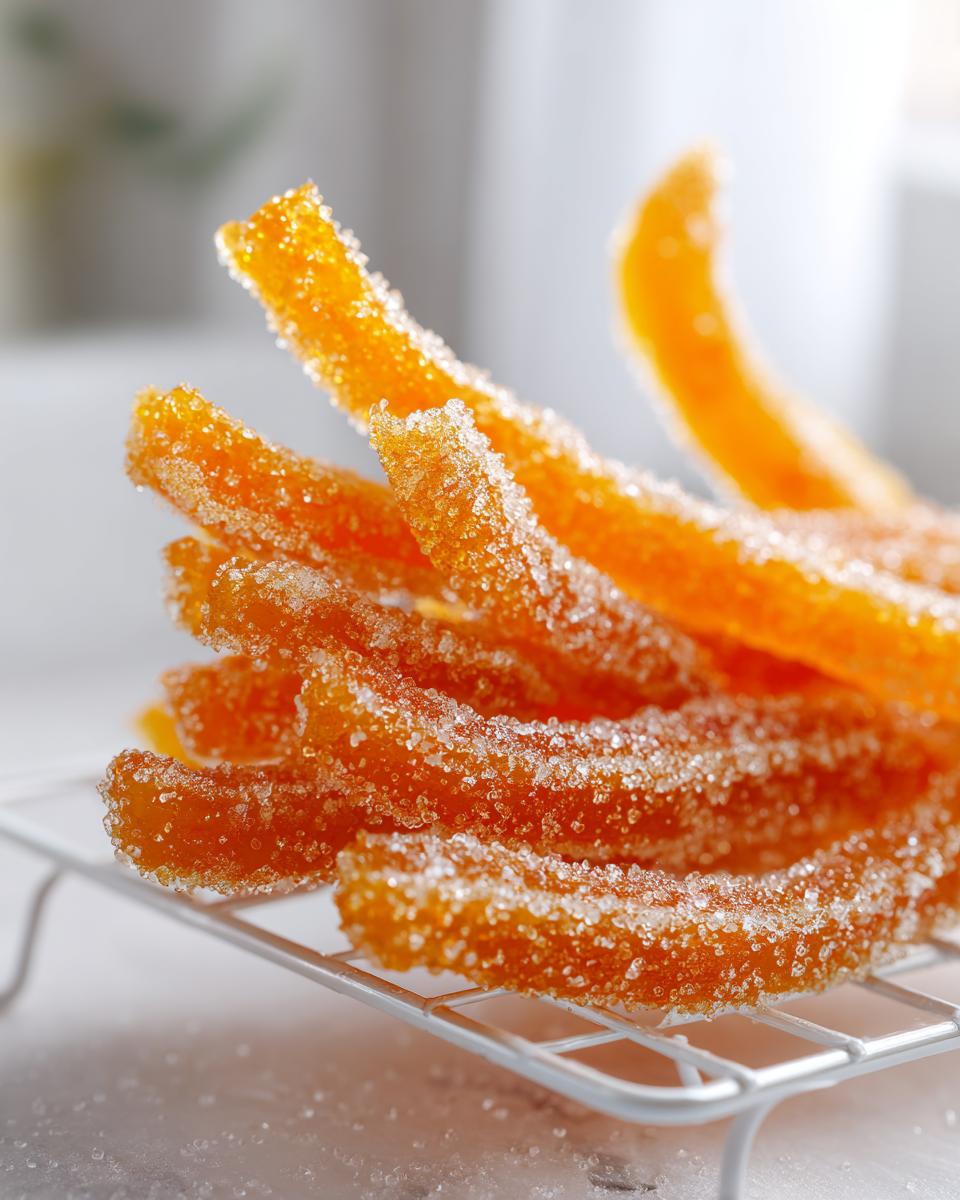
This is the hardest part: waiting! Lay those coated strips back onto the mesh rack. They need to sit out at room temperature for a good 12 to 24 hours. Don’t rush this drying period! They have to dry completely so the coating sets firm and doesn’t clump when you store them. Once they are dry to the touch, pop them into an airtight container, and that’s it—project complete!
Creative Ways to Use Your Homemade Candied Orange Peel
Now that you’ve put in the efficient work to make these incredible treats, we have to talk about maximizing their use. Honestly, just walking by the jar and popping one in your mouth is a thrill, but these little slabs of sunshine are amazing for elevating everything else. Think of them as your secret weapon for sophistication!
First off, let’s talk presentation. These make the most stunning cocktail garnish ideas. Imagine a simple gin fizz or old fashioned made perfect with a beautiful, glittering strip draped over the rim. If you’re looking for cocktail inspiration, check out my recipe for the Apple Cider Moscow Mule—it begs for a candied rim!
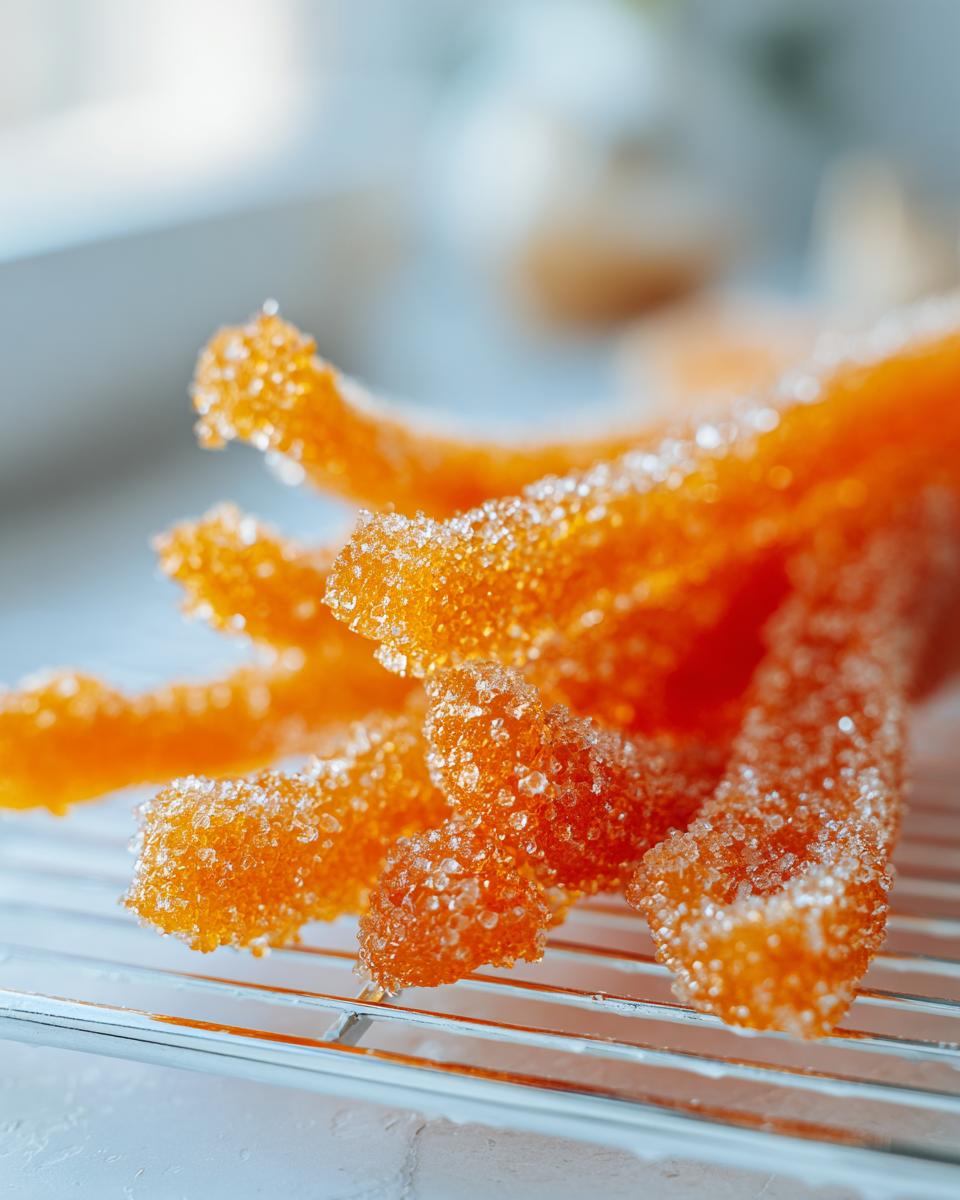
For baking, they elevate things instantly. Chop them finely and mix them right into your batter for brownies or scones. They are absolutely essential if you’re making a cake like my Cranberry Orange Cake; it just doubles down on that amazing citrus note.
And if you made enough, package them up! Tie a ribbon around a small jar of this sugar coated orange peel. It’s sustainable, it’s gourmet, and it shows you put thought into creating something truly delicious.
Tips for Success When Making Candied Orange Peel
Even with streamlined steps, a few pro-level checkpoints ensure these turn out absolutely perfect. Remember, treating this like a manageable engineering project means we track the variables. Selection is the first big win here.
When you buy your oranges, look for the thickest skin possible. Thicker skin equals more peel! Also, check for anything overly waxy on the surface; you want to wash off surface residue, but super thick wax can sometimes resist the blanching process. We want pure orange flavor coming through, not leftover polish.
- Don’t be tempted to reduce the blanching steps! That’s the only way to guarantee you aren’t fighting bitterness later.
- After the simmer, make sure the peels are just translucent—if you cook them too long, they can start to dissolve or get mushy, which ruins the structure.
- When you roll them in the final sugar, use your hands! You need to press the sugar onto the sticky surface firmly enough to get a solid, dry coat.
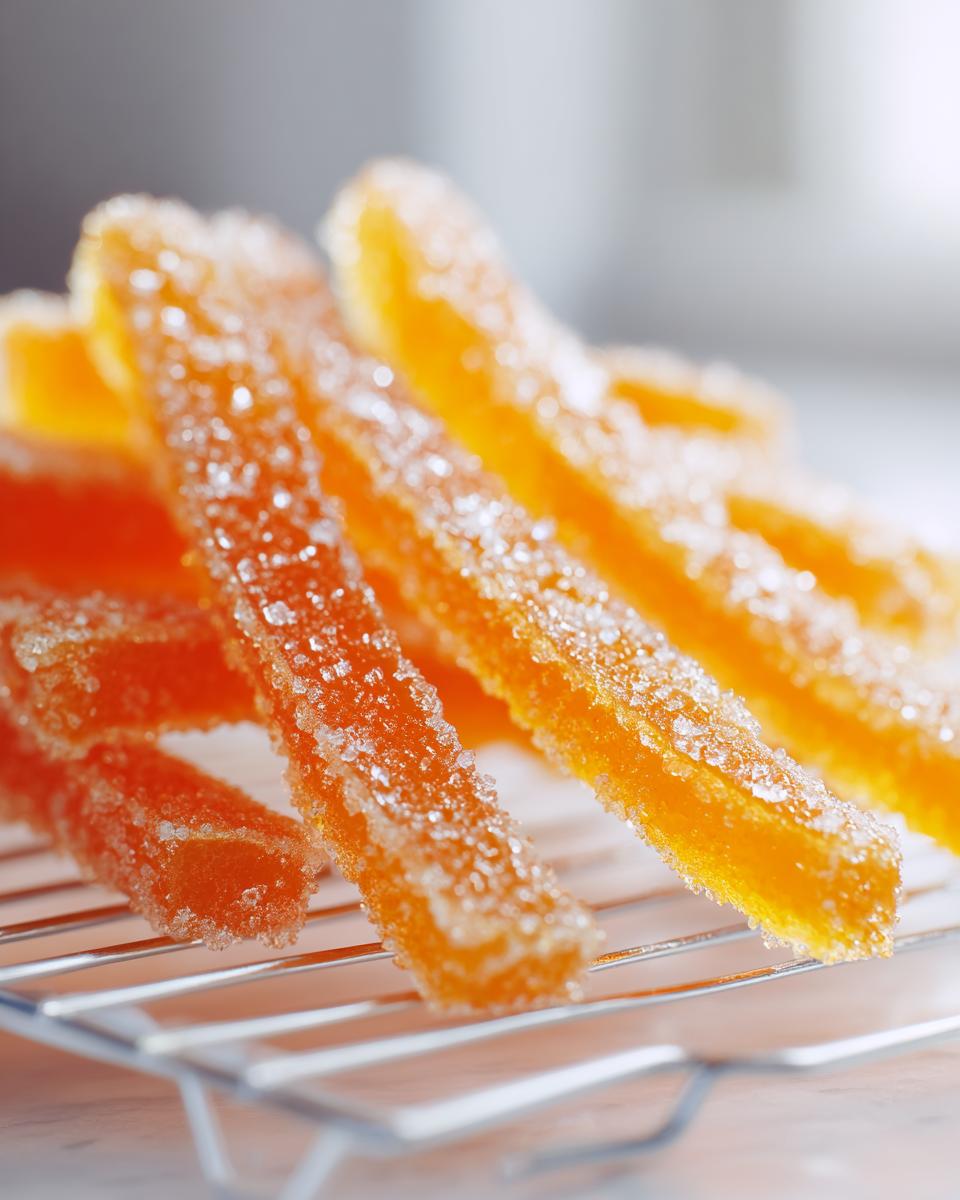
This attention to detail is what separates a good batch from a recipe you want to make forever, much like how focusing on the quality fats makes our olive oil cake so reliably moist.
Storage and Shelf Life of Sugar Coated Orange Peel
Once you’ve gone through all those steps to create beautiful, **sugar coated orange peel**, we need to make sure they last. The thick sugar glaze is actually your built-in preservation system here, which is why this store so well! You need to stash them in an airtight container—I use a clean glass jar—and keep that jar in a cool, dark pantry area.
If they are fully dried before storage, these homemade citrus candies should stay perfect for several weeks, maybe even a month or two. Just avoid putting them in the fridge. Condensation is the enemy; it makes the sugar dissolve and turns your beautiful work sticky again!
Variations: Making Dried Citrus Slices and Other Candied Peels
You absolutely do not have to stop at just oranges here. Once you’ve mastered this efficient system, you’ll look at every piece of uneaten citrus in your fridge as a potential new project! This same basic framework works wonders for lemons, limes, and even grapefruit, allowing you to produce stunning arrays of **dried citrus slices**.
If you’re using lemons, the peels are thinner, so you might find them translucent faster during the simmer—always watch for that visual cue rather than sticking religiously to the timer. Grapefruit peels are thicker and definitely benefit from that triple blanching, maybe even a fourth time if you find them particularly bitter!
Think about creating a mixed candy batch for gifting. It looks incredible arranged together. If you chop up the finished lemon pieces, they make such a zesty burst in a cookie, like the ones in my cranberry orange cookies. It’s all about repurposing these simple methods to create varied bits of **homemade citrus candy**!
Frequently Asked Questions About Candied Orange Peel
I know you might have questions running through your head before you start this project. That’s natural! Efficiency in the kitchen means knowing the answers upfront so you don’t waste time troubleshooting mid-cook. Here are the most common things people ask me about making these delightful treats.
Can I use the leftover syrup from making Candied orange peel?
Absolutely, yes! Please don’t toss that syrup! It’s basically an orange-flavored sugar syrup that took you an hour to create. I use mine immediately to sweeten my morning tea, or you can chill it down and use it as a fantastic base for cocktails. It’s a perfect base for anything that needs a little citrus lift—maybe even for glazing my orange chicken next time, just kidding… mostly!
How do I get the crispiest coating on my sugar coated orange peel?
This comes down to two things: dryness and timing. Before you even roll them in that final sugar coating, those peels need to have drained for that full hour, minimum. They should feel sticky, but not wet. Then, after you roll them, you have to commit to the drying time—12 hours is the minimum I want to see. If they feel tacky when you try to store them, they aren’t done. That full drying time ensures that beautiful, firm, slightly crystalline coating sets up perfectly.
What is the best way to cut the orange peels for this recipe?
I keep shouting this one because I think it’s key to success! You want the strips to be consistent, aiming for about a quarter-inch wide. If they are too wide, they take forever to become translucent. More importantly? Get a clean cut! Try hard not to bring much of that spongy white pith along with the colored part of the peel. That pith is what holds the bitterness, and the more you remove now, the less work your triple blanching has to do later.
Nutritional Estimates for Candied Orange Peel
Now, I know some of you sugar lovers might want to skip this section, but for my fellow efficiency experts, estimating the macros is just part of completing the project analysis! Since this is primarily fruit rind soaked in sugar syrup, the numbers reflect that reality. Keep in mind these values are estimates calculated based on the total yield of the recipe.
When I crunch the numbers for the whole batch, I divide that down based on an estimated yield of about 1 cup of finished product. If you find yourself dipping into the jar more than you planned for testing purposes, you might want to check out my protein muffin recipe—it’s a smarter way to get your sweet fix!
For a serving size of about 1/4 cup, here’s what the data looks like:
- Calories: 350
- Sugar: 85g (Yes, that’s where most of the calories come from!)
- Carbohydrates: 90g
- Fiber: 4g
- Protein: 1g
- Fat: 0g
Just a quick disclaimer: These are ballpark figures based on standard ingredient assumptions. Depending on the size of your oranges and the exact brand of sugar you use, these numbers can shift slightly. But generally, think of this as a delightful, high-sugar treat or a powerful baking addition, not exactly a health food!
PrintSimple Candied Orange Peel Recipe

Learn how to make homemade citrus candy from orange rinds. This method transforms peels into glassy, sugar-coated confections perfect for snacking or as a cocktail garnish.
- Prep Time: 20 min
- Cook Time: 1 hr 15 min
- Total Time: 1 hr 35 min
- Yield: About 1 cup 1x
- Category: Dessert
- Method: Stovetop Simmering
- Cuisine: American
- Diet: Vegetarian
Ingredients
- 3 large oranges
- 4 cups water, divided
- 3 cups granulated sugar, divided
- 1 cup water (for syrup)
Instructions
- Prepare the oranges: Wash the oranges well. Use a sharp knife to cut the peel into strips about 1/4 inch wide. Avoid cutting too deeply into the white pith.
- Blanch the peels: Place the orange strips in a medium saucepan and cover with 4 cups of cold water. Bring to a boil over high heat. Once boiling, drain immediately. Repeat this boiling and draining process two more times (three times total) to reduce bitterness.
- Simmer: Return the blanched peels to the saucepan. Add 1 cup of fresh water and 1 cup of sugar. Bring the mixture to a simmer over medium heat. Cook gently for about 45 minutes, stirring occasionally, until the peels become translucent.
- Drain: Remove the peels from the syrup using a slotted spoon and set them on a wire rack placed over a baking sheet. Let them drain for at least 1 hour. Reserve the remaining syrup for later use if desired.
- Sugar coat: In a shallow dish, spread out the remaining 2 cups of granulated sugar. Roll the drained, sticky orange peels in the sugar until they are completely coated.
- Dry: Place the sugar-coated orange peel strips back onto the wire rack. Let them dry at room temperature for 12 to 24 hours until the sugar coating is dry and firm. Store in an airtight container.
Notes
- You can use the leftover syrup as a simple syrup for cocktails or to sweeten tea.
- For a more intense flavor, use organic oranges.
- These dried citrus slices make excellent homemade citrus candy gifts.
Nutrition
- Serving Size: 1/4 cup
- Calories: 350
- Sugar: 85
- Sodium: 5
- Fat: 0
- Saturated Fat: 0
- Unsaturated Fat: 0
- Trans Fat: 0
- Carbohydrates: 90
- Fiber: 4
- Protein: 1
- Cholesterol: 0