Country Loaf with Sourdough Discard
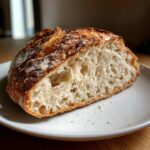
A reliable recipe for a rustic country loaf that effectively uses your excess sourdough discard, resulting in a flavorful bread with good oven spring.
- Prep Time: 20 min
- Cook Time: 45 min
- Total Time: 13 hours 5 minutes
- Yield: 1 loaf 1x
- Category: Baking
- Method: Baking
- Cuisine: American
- Diet: Vegetarian
Ingredients
Scale
- 350g bread flour
- 150g whole wheat flour
- 350g water (room temperature)
- 100g active sourdough discard (unfed starter)
- 10g fine sea salt
- 3g instant dry yeast (optional, for insurance)
Instructions
- Mix the flours, water, and sourdough discard in a large bowl until just combined. Cover and let it rest for 30 minutes (autolyse).
- Add the salt and optional yeast to the dough. Mix thoroughly by hand until the salt is incorporated and the dough starts to feel slightly stronger.
- Perform four sets of stretch and folds, spaced 30 minutes apart, over the next two hours. This builds structure.
- Let the dough bulk ferment at room temperature (around 72°F) until it has increased in volume by about 30-50%. This may take 3 to 5 hours, depending on your kitchen temperature.
- Gently turn the dough out onto a lightly floured surface. Pre-shape it into a loose round. Let it rest, covered, for 20 minutes (bench rest).
- Shape the dough tightly into your desired final shape (round or oval). Place it seam-side up in a well-floured banneton basket.
- Cold proof the dough in the refrigerator for 12 to 18 hours. This develops the tangy flavor.
- Preheat your oven to 500°F (260°C) with a Dutch oven inside for at least 45 minutes.
- Carefully remove the hot Dutch oven. Gently turn the cold dough out onto parchment paper. Score the top surface of the loaf with a sharp blade.
- Carefully lower the dough (using the parchment paper) into the hot Dutch oven. Cover and bake for 20 minutes.
- Reduce the oven temperature to 450°F (230°C). Remove the lid and continue baking for another 20 to 25 minutes until the crust is deep brown.
- Transfer the loaf to a wire rack to cool completely before slicing.
Notes
- Using 100% discard instead of active starter contributes to a milder tang but requires careful monitoring during bulk fermentation.
- For a higher hydration discard bread, increase the water slightly, but be prepared for stickier dough management.
- If your kitchen is cold, place the dough in a slightly warmer spot during bulk fermentation to speed up the process.
- A good crust comes from high initial heat and steam provided by the Dutch oven.
Nutrition
- Serving Size: 1 slice
- Calories: 250
- Sugar: 1
- Sodium: 350
- Fat: 1
- Saturated Fat: 0
- Unsaturated Fat: 1
- Trans Fat: 0
- Carbohydrates: 55
- Fiber: 3
- Protein: 9
- Cholesterol: 0
Find it online: https://dishicious.com/country-loaf-with-sourdough-discard/