

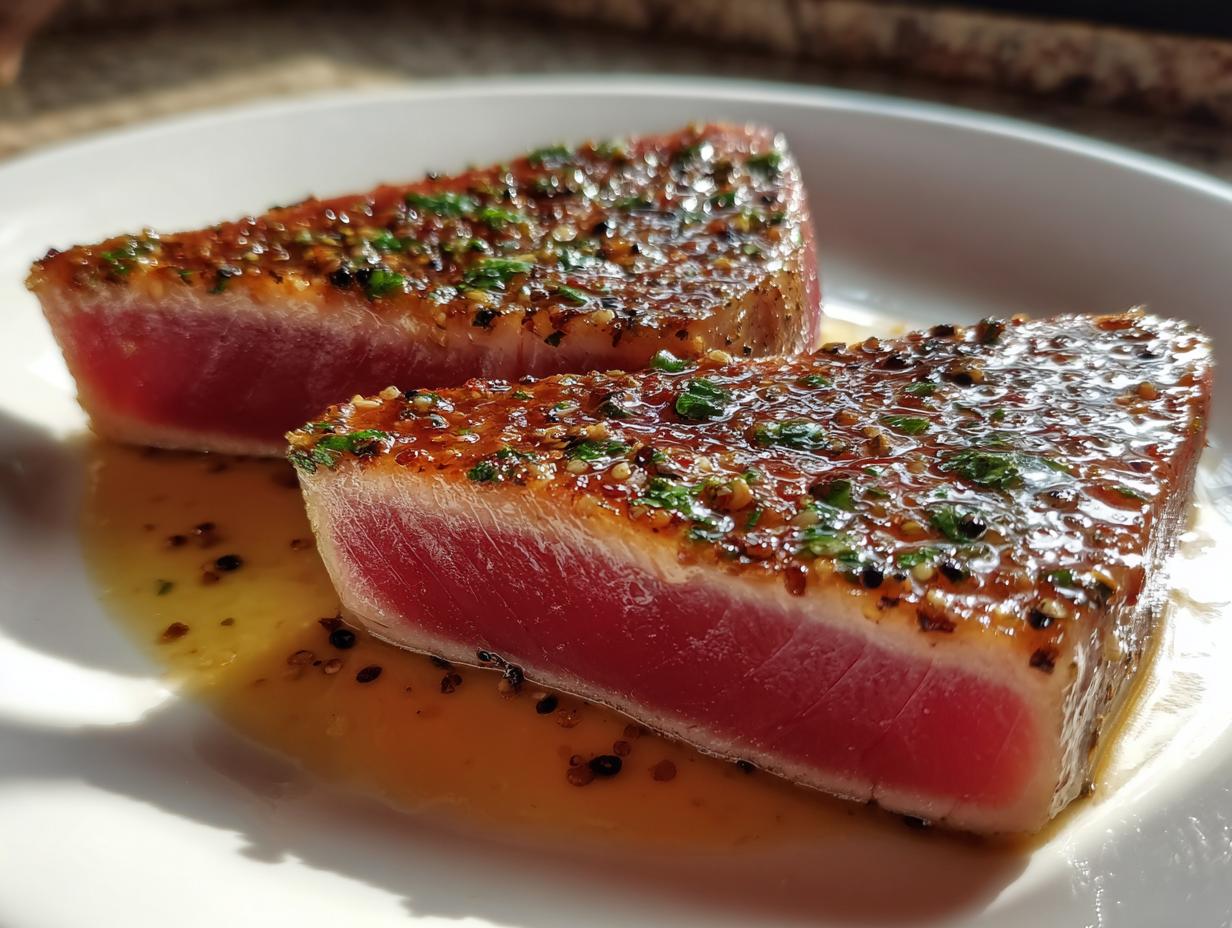
Listen, I know the dinner dilemma. You want something that tastes like you spent forty dollars and an hour fussing over it, but you also have, like, zero time after a long day. That’s where my project manager brain steps in. I took the complexity out of getting that incredible, restaurant-quality seafood experience at home. This recipe for a perfect **Tuna steak** uses the sheer efficiency of a high-heat pan-sear followed by a quick garlic butter baste. Seriously, you are looking at **Restaurant Style Seafood** that’s ready in way less than 15 minutes. It’s smarter cooking, guaranteed to deliver big flavor fast.
- Why This Pan-Seared Tuna Steak Recipe Works So Well
- Ingredients Needed for Your Best Tuna Steak
- Step-by-Step Instructions: How to Cook Tuna Steak Perfectly
- Tuna Steak Cooking Tips for a Healthy High Protein Dinner
- Ingredient Notes and Substitutions for Your Tuna Steak Recipe
- Serving Suggestions for Your Flavorful Tuna Glaze Meal
- Storage and Reheating Instructions for Leftover Tuna Steak
- Frequently Asked Questions About Cooking Tuna Steak
- Nutritional Snapshot for Your Tuna Steak Meal
Why This Pan-Seared Tuna Steak Recipe Works So Well
We engineered this recipe to solve the busy weeknight problem. You get amazing results without any guesswork. This is the ultimate **Quick Tuna Dinner** because we focus only on what truly moves the needle on flavor and texture. Look, if it doesn’t make your dinner exponentially better for minimal effort, we cut it out. That’s the Dishicious way.
- Speed and Efficiency: This entire process, from starting the heat to slicing the fish, takes under 15 minutes total. No waiting around!
- Maximum Flavor Impact: We use high-contrast elements—a salty sear against rich, savory butter—for complexity that tastes expensive.
- Guaranteed Texture: We teach you the precise technique so you never end up with dry, sad tuna. It stays tender inside every time.
Achieving the Perfect Seared Tuna Steak Crust
This is non-negotiable, people. If you want that **Perfectly Seared Tuna** that looks like it came from the best sushi bar, you need two things: screaming hot pan and bone-dry fish. Any moisture on the surface turns into steam, and steam prevents browning. My methodical approach? Always use a heavy, well-seasoned cast iron skillet. It holds that intense heat better than anything else, ensuring you get that deep mahogany crust almost instantly.
Flavor Infusion with Garlic Herb Butter Basting
Once we have that beautiful crust locked in—and only then—we introduce the flavor agents. Adding butter, fresh garlic, and thyme directly to the hot pan when we flip the fish creates a quick, fragrant sauce. Tilting the pan and spooning that herby, sizzling liquid over the top—that’s the basting magic. That process guarantees a **Succulent Tuna Steak** drenched in **Garlic Butter Tuna** flavor before it even hits the plate.
Ingredients Needed for Your Best Tuna Steak
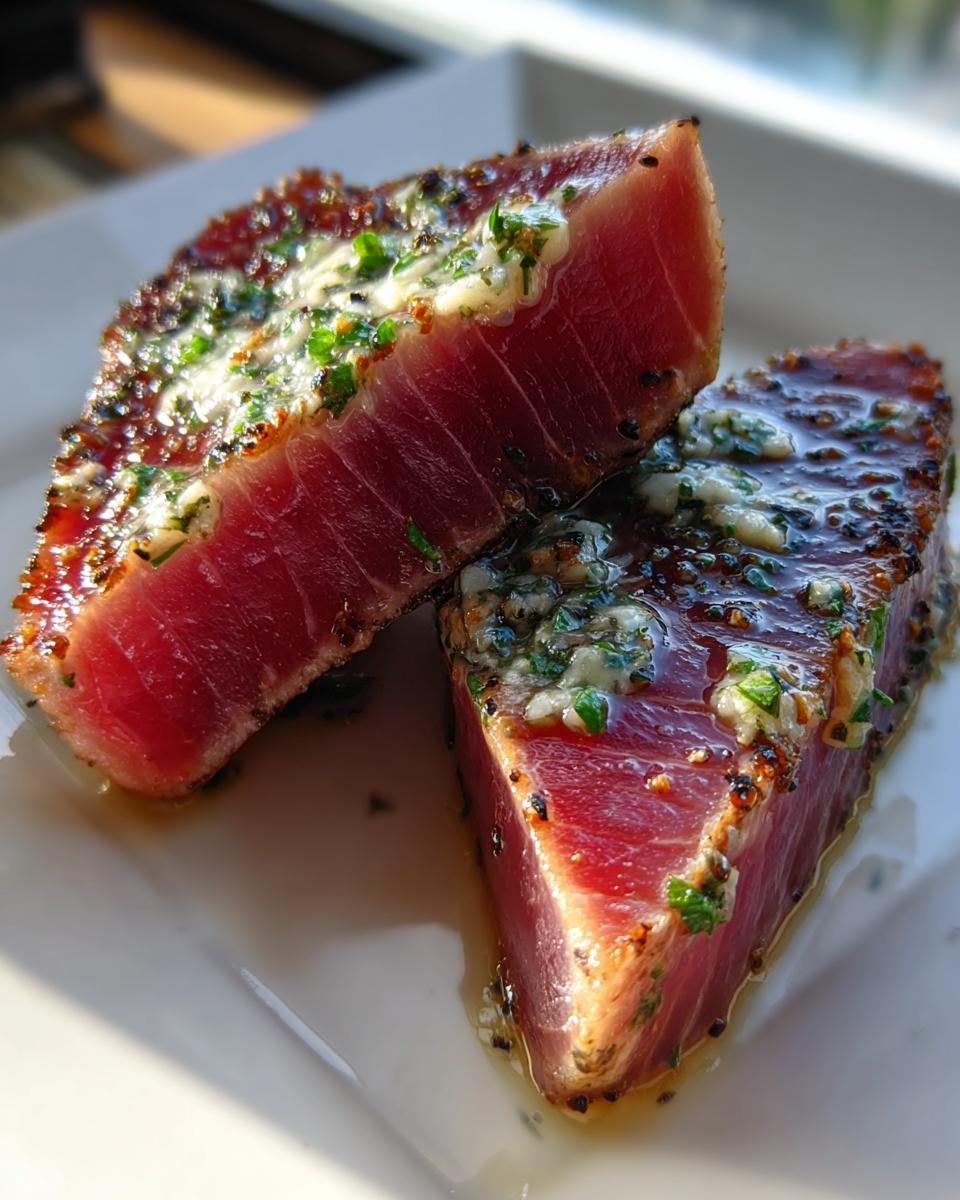
For these **Tuna Steak Recipes**, quality really matters because the cook time is so short. We’re keeping the ingredient list lean so we can focus on technique. The most important thing is getting two **tuna steak** fillets that are about an inch thick. If you can swing it, grab sushi-grade—it makes all the difference for a juicy inside. You’ll also need standard pantry helpers for seasoning and that killer butter sauce.
- Two 6-ounce ahi tuna steaks, about 1 inch thick
- 1 tablespoon good olive oil
- Kosher salt and black pepper, to taste
- 4 tablespoons unsalted butter (don’t skimp here!)
- 2 cloves garlic, finely minced
- 1 teaspoon fresh thyme leaves
- 1 tablespoon fresh parsley, roughly chopped
Step-by-Step Instructions: How to Cook Tuna Steak Perfectly
Okay, let’s get organized. Since we are cooking this in about eight minutes total, preparation is the key to success. Think of this part like setting up your workstation before a busy shift—everything needs to be right there. Once the pan is hot, we move fast! These are the simple, non-negotiable steps for learning exactly **How to Cook Tuna Steak** so it’s perfect every time. If you’ve ever made my easy baked garlic butter salmon, you know I rely on good, reliable steps, and this is no different.
Preparation and Seasoning of the Tuna Steak
This is the step most folks rush, and it’s the biggest mistake they make. You absolutely must dry those steaks like your life depends on fresh heat transfer. Grab a big stack of paper towels and pat every single surface of your **tuna steak** until it feels totally dry. If there’s any water left, it’ll steam, not sear. Once they are dry, season them liberally on all sides with salt and pepper. Don’t be shy—that salt starts building that flavorful crust immediately.
The High-Heat Sear: Building the Crust on Your Tuna Steak
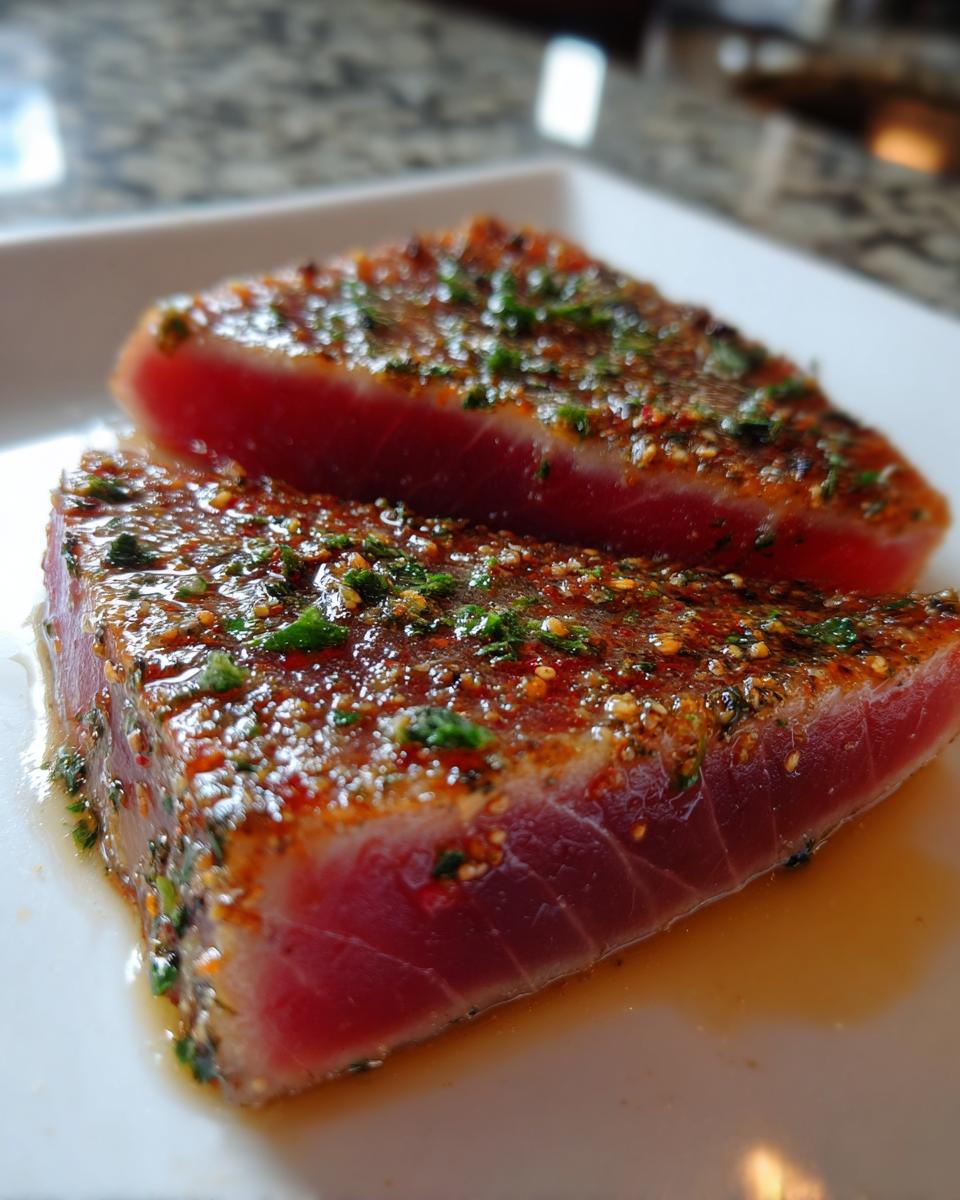
Get your heavy skillet—cast iron is always my champion here—on the stove over high heat. We want it ripping hot. Pour in your tablespoon of olive oil. Wait until that oil starts to shimmer, maybe even looks a little wavy, and then carefully place the seasoned steaks in the skillet. Here’s the dictator rule: once they are in, DO NOT touch them for 1.5 to 2 minutes. You are building a crust here! If you nudge it, you’ll tear your beautiful browning layer off.
Basting Technique for a Flavorful Tuna Steak Finish
Once the first side is deeply browned, flip those steaks immediately. Now, drop in your butter, the minced garlic, and the thyme sprigs. As that butter melts and sizzles, tilt the pan toward you so the butter pools up nicely on one side. Take a sturdy spoon and scoop that fragrant, hot herb butter right over the top surface of the tuna repeatedly. Keep basting constantly for the remaining 1.5 to 2 minutes. This process coats the top layer, infusing that amazing **Garlic Butter Tuna** flavor and helping you achieve that **Restaurant Style Seafood** look without even turning on the broiler.
Tuna Steak Cooking Tips for a Healthy High Protein Dinner
Since we are aiming for a **Healthy High Protein Dinner** here, we need precision. Tuna cooks incredibly fast, which is great, but it means taking it off the heat at exactly the right moment is crucial. A minute too long, and that beautiful rare center we worked for turns into something tough. If you are feeling adventurous and want a big kick—hello, **Blackened Tuna Steak**!—just dust the seasoned steaks with some robust Cajun seasoning right before they hit the oil. That spice blend gives you a fantastic crust without adding much time to the overall cook. For more ideas on quick spice combinations, check out my guide to easy flavor boosters.
Determining Doneness for Your Tuna Steak
For the best flavor and texture, which is what everyone expects from great **Ahi Tuna Recipes**, we want the center to be warm but still distinctly rare—think deep red, almost translucent. Visually, when you flip the steak, you want to see the cooked ring creeping about 1/4 inch up the side. Since the internal temperature will continue to rise even after it leaves the pan (that’s carryover cooking!), you must pull it off slightly early. Trust me on this; fighting the urge to cook it longer is the hardest part.
Essential Resting Time for Succulent Tuna Steak
I know, I know. It’s just fish, and it cooks in eight minutes, so why rest it? Because even quick-cooking proteins need to calm down. Skipping the rest for this **tuna steak** means all those lovely juices we created while basting will immediately run out onto your cutting board the second you slice it. Let those beautiful steaks rest, undisturbed, on the board for three minutes. That downtime lets the muscle fibers relax and redistribute the moisture, ensuring every single slice is incredibly juicy.
Ingredient Notes and Substitutions for Your Tuna Steak Recipe
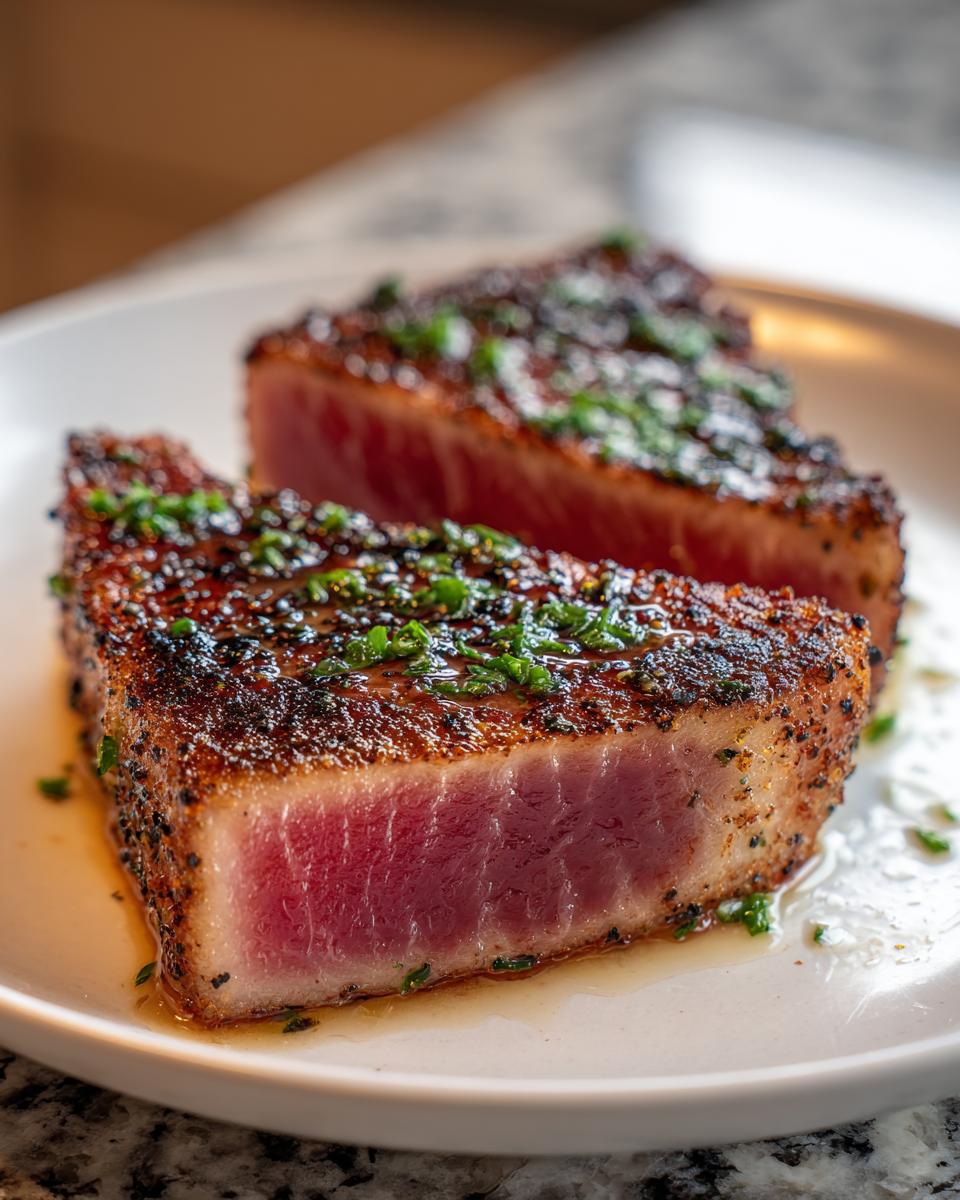
Let’s talk sourcing, because with high-quality **tuna steak**, what you start with dictates what you finish with. Because we are searing this so quickly, you absolutely need the best quality fish you can find. I always tell people: if you wouldn’t eat it raw, don’t cook it quick like this! Always try to find sushi-grade or sashimi-grade ahi tuna. It just has a superior texture that handles the high heat perfectly, giving you that gorgeous, melt-in-your-mouth center we’re aiming for in this **Garlic Butter Tuna** recipe.
Now, for the butter—this is crucial for that amazing flavor infusion. Use good unsalted butter. Don’t even think about margarine here; butter carries the flavor of the garlic and herbs so much better. If you somehow run out of fresh herbs, dried herbs work in a pinch, but you need to cut the amount by about two-thirds, or they can taste a little dusty. Remember how I mentioned simple, elegant solutions? If you’re out of thyme, dried oregano or even a tiny pinch of crushed rosemary can work as an emergency substitute, but nothing beats fresh thyme for pairing with garlic.
If you’re looking to branch out after mastering this sear, I have a great guide on making easy homemade naan bread where high-quality dairy also makes a huge difference. It’s all about honoring the main ingredients!
Serving Suggestions for Your Flavorful Tuna Glaze Meal
So you’ve nailed that incredible sear on your **Tuna steak**, and the rich garlic butter is singing. That means we need sides that play nicely—nothing too heavy that fights the delicate flavor of the fish. Because this is such a quick main course, I always lean into fresh, colorful sides that require minimal cooking time themselves. We need brightness to cut through that richness!
Think light and zesty. A simple side of roasted asparagus works wonders, maybe tossed with a squeeze of lemon right at the end. Or, if you want something with a little more punch, my street corn salad recipe offers a creamy, tangy contrast that is just fantastic next to the savory **Flavorful Tuna Glaze** seafood. Steamed rice or perhaps a quick quinoa pilaf will soak up any extra butter left in the pan beautifully. Keep it simple, keep it fresh, and let that beautifully seared tuna be the star of your plate!
Storage and Reheating Instructions for Leftover Tuna Steak
Okay, let’s be real about leftovers—especially when we talk about perfectly seared tuna. Because this **tuna steak** cooks so fast and is best served rare or medium-rare, reheating it is a tricky balancing act that usually ends in disappointment. My number one rule? Try really hard not to have leftovers! This **Easy Seafood Main Course** is designed to be eaten right after that three-minute rest.
However, if you absolutely have some left over, store it in an airtight container immediately in the fridge. It will last safely for about two days, max. When it comes to time efficiency, the texture degrades quickly once it’s fully cooked through.
My go-to method for leftover tuna is to embrace the cold preparation. Don’t try to heat it back up in a pan; you’ll just cook it further into a dry hockey puck. Instead, slice the chilled tuna thinly—that’s right, slice it against the grain super thin, just like you might for tataki. Then, toss those cold slices into a big, crisp salad with a sharp vinaigrette. It turns into a fantastic, high-protein lunch the next day. It keeps the texture interesting and honors the quick-cook nature of the fish.
Frequently Asked Questions About Cooking Tuna Steak
I get tons of messages about specific situations when people try to squeeze this recipe into their schedule. It’s true, this is the perfect definition of a **15 Minute Tuna Meal**, but sometimes life throws curveballs like needing to use frozen fish. Let’s clear up some common sticking points so you can execute this recipe flawlessly every time, whether you’re deep-diving into **Ahi Tuna Recipes** or just need dinner fast.
Can I use frozen tuna steaks for this recipe?
You can, but you have to respect the thawing process. You cannot just throw a frozen steak in a hot pan; that’s a recipe for a raw center and burnt edges. If you must use frozen, move the steaks to the refrigerator—and only the refrigerator—at least 12 hours before you plan to cook. Once thawed, treat them exactly like fresh fish. Pat them aggressively dry! Honestly, though, for the best sear, fresh is always the way to go.
What is the best internal temperature for a medium-rare tuna steak?
This is where the project management mindset really helps—we rely on measurable data! For that perfect, warm, rare center that makes a **tuna steak** taste luxurious, you are aiming for an internal temperature right around 115°F to 120°F when you pull it from the heat. Remember, it will climb another 5 to 10 degrees while it rests. If you prefer medium, push it toward 130°F, but frankly, that’s almost a waste of good ahi!
Can I use a marinade instead of seasoning for this tuna steak?
You absolutely can use a **Tuna Steak Marinade**, but you need to adjust the searing steps. The beauty of our basic seasoning method is that the dry surface maximizes that high-heat crust. If you marinate the fish—say, in a soy-ginger mixture—the moisture and sugars (like honey, if your marinade has it) will actually burn before the internal temperature is right. If you use a marinade, pat the steak down as dry as possible after soaking, and you might need to slightly reduce the initial searing time by about 30 seconds per side, or drop your pan temperature down from high to medium-high. For general ideas on amazing flavor boosters, check out my guide to flavor bases.
Nutritional Snapshot for Your Tuna Steak Meal
When you’re striving for that **Healthy High Protein Dinner**, knowing what’s on your plate is super important. This pan-seared **tuna steak** recipe is fantastic because it’s naturally lean, packed with protein, and keeps the carbs almost non-existent. It’s one of those **Lean Seafood Recipes** that just makes you feel good after eating it, provided you stick close to the recipe itself!
Remember, I’m a home cook, not a registered dietitian, so these numbers are solid estimates based on the ingredients listed—especially that 1-inch thick steak and the four tablespoons of butter we use for basting. If you use less butter or skip the butter entirely, you’ll cut down the fat content easily. But hey, that garlic butter is half the fun, right?
Here’s the breakdown per serving (one steak):
- Serving Size: 1 steak
- Calories: 350
- Protein: 45g
- Fat: 18g
- Saturated Fat: 9g
- Sugar: 0g
- Carbohydrates: 1g
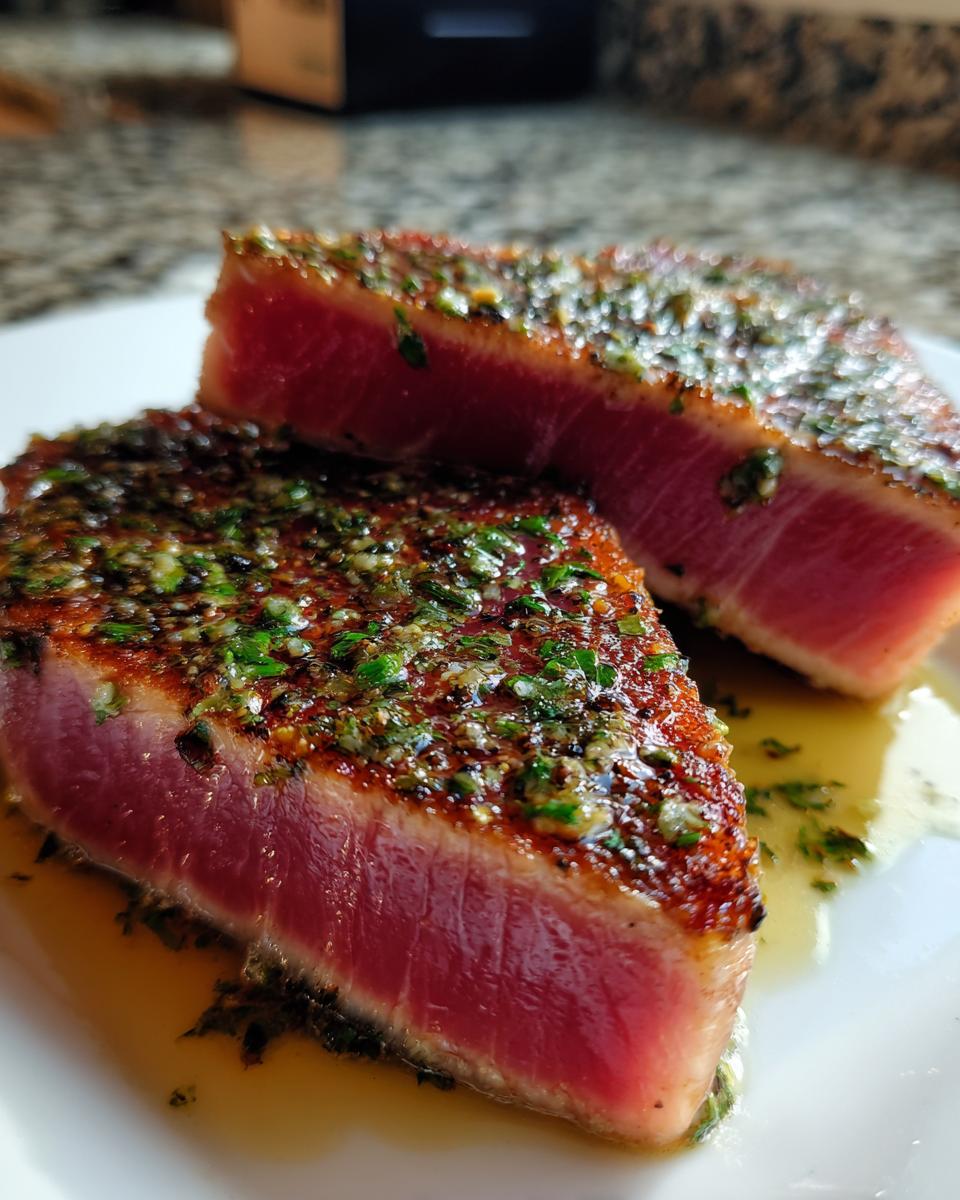
Seriously, 45 grams of protein in one quick meal? That’s why I love this fish so much. It’s an incredibly efficient way to manage your macros. If you’re looking for more simple, surprisingly good dishes that nail the numbers, you should check out how I approach easy no-bake treats—sometimes the sweet stuff can be managed too, using good ratios!
PrintPerfect Pan-Seared Tuna Steaks with Garlic Herb Butter
Cook restaurant-quality tuna steaks at home in under 10 minutes. This recipe uses a simple pan-sear method and basting with garlic herb butter for a tender, flavorful result.
- Prep Time: 5 min
- Cook Time: 8 min
- Total Time: 13 min
- Yield: 2 servings 1x
- Category: Dinner
- Method: Pan Searing
- Cuisine: American
- Diet: Low Fat
Ingredients
- 2 (6-ounce) ahi tuna steaks, about 1 inch thick
- 1 tablespoon olive oil
- 1 teaspoon kosher salt
- 1/2 teaspoon black pepper
- 4 tablespoons unsalted butter
- 2 cloves garlic, minced
- 1 teaspoon fresh thyme leaves
- 1 tablespoon fresh parsley, chopped
Instructions
- Pat the tuna steaks completely dry using paper towels. Season both sides evenly with salt and pepper.
- Place a heavy-bottomed skillet, like cast iron, over high heat. Add the olive oil. Wait until the oil shimmers slightly.
- Carefully place the tuna steaks in the hot skillet. Sear for 1.5 to 2 minutes without moving them to develop a crust.
- Flip the steaks. Immediately add the butter, minced garlic, and thyme to the skillet.
- As the butter melts, tilt the pan slightly and use a spoon to continuously baste the melting garlic butter over the top of the tuna steaks for another 1.5 to 2 minutes.
- Remove the tuna from the pan immediately. The center should be rare to medium-rare.
- Let the steaks rest on a cutting board for 3 minutes. Sprinkle with fresh parsley before slicing against the grain.
Notes
- For a medium sear, cook for 2.5 minutes per side, basting constantly.
- If you prefer a spicy crust, lightly coat the tuna with Cajun seasoning before searing for a blackened tuna steak effect.
- Use high-quality, sushi-grade tuna for the best texture and flavor.
Nutrition
- Serving Size: 1 steak
- Calories: 350
- Sugar: 0
- Sodium: 450
- Fat: 18
- Saturated Fat: 9
- Unsaturated Fat: 9
- Trans Fat: 0
- Carbohydrates: 1
- Fiber: 0
- Protein: 45
- Cholesterol: 90