

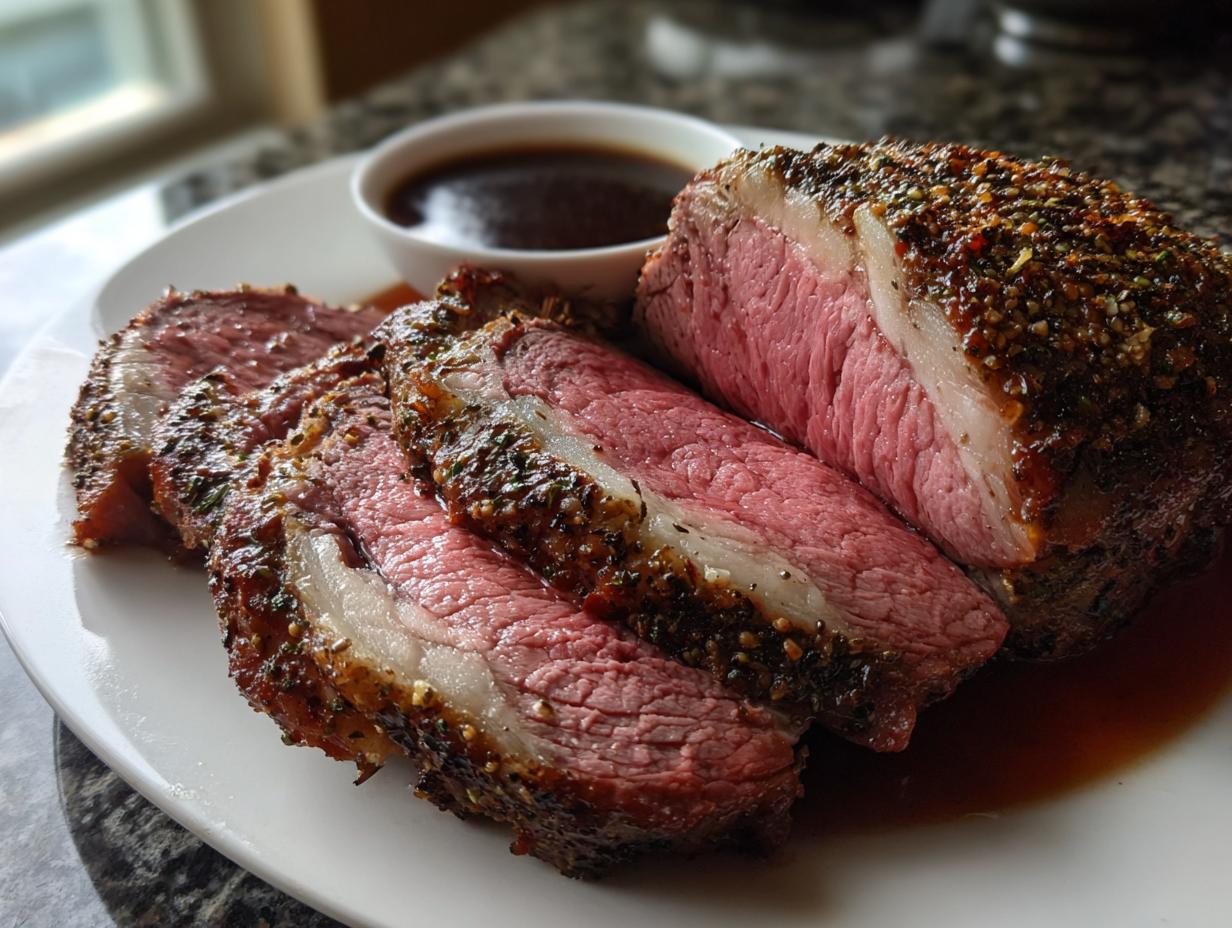
When it comes to holiday centerpieces, nothing commands the table quite like a massive, perfectly cooked rib roast. But let’s be real—we don’t have time for complicated culinary theater. As a busy guy who approaches cooking like a project manager, I engineered this ultimate *easy prime rib recipe* to deliver maximum flavor with minimum stress. If you’re aiming for that show-stopping, tender, juicy roast with a shatteringly crisp crust, whether it’s for *prime rib for Christmas dinner* or just a super impressive weekend meal, this is the blueprint. You get that restaurant quality you’re looking for without any unnecessary guesswork.
- Why This is the Best Prime Rib Recipe for Your Holiday Table
- Ingredients for Your Herb Crusted Prime Rib Recipe
- How to Cook Prime Rib: Step-by-Step Instructions
- Tips for a No Fail Prime Rib Recipe Success
- Ingredient Notes and Substitutions for Your Prime Rib Recipe
- Serving Suggestions for Your Perfect Prime Rib Roast
- Storage and Reheating Instructions for Leftover Prime Rib Recipe
- Frequently Asked Questions About the Easy Prime Rib Recipe
- Estimated Nutritional Data for This Prime Rib Recipe
Why This is the Best Prime Rib Recipe for Your Holiday Table
I designed this to be the ultimate *no fail prime rib recipe*—reliable enough for a busy Saturday, impressive enough for the big holidays. It’s about efficiency meeting unbelievable flavor. Forget culinary guesswork; we project-manage our way to perfection here.
- It guarantees that *juicy prime rib* texture because we nail the starting temperature and resting time.
- The simple *herb crusted prime rib* seasoning blend is packed with flavor but takes two minutes to mix up.
- It’s our go-to for *prime rib for Christmas dinner* because the steps are clear and the results are always a showstopper. Trust me, this is the one you save.
If you’re doing beef, you definitely need something incredible to go alongside, like my foolproof recipe for Yorkshire pudding that guarantees a perfect rise.
Ingredients for Your Herb Crusted Prime Rib Recipe
When we talk about creating the best prime rib recipe, the ingredient list has to be lean and mean. No obscure sourcing needed here; we stick to things you can grab easily. Getting the roast size right is crucial for the timing, and using kosher salt is non-negotiable for a good exterior crust development. Think of this as the minimal viable product that delivers maximum results.
For the Herb Crust and Roast
This is the core structure of your roast. Remember, a bone-in cut adds flavor and helps insulate the meat slightly, leading to a more reliable cook, which is perfect for this oven roasted prime rib method.
- 1 (5-7 pound) bone-in prime rib roast (That’s usually two ribs, aim for close to 6 pounds if you can manage it!)
- 3 tablespoons olive oil
- 4 cloves garlic, minced (fresh is best, always!)
- 2 tablespoons fresh rosemary, chopped fine
- 1 tablespoon fresh thyme leaves
- 1 tablespoon kosher salt (Don’t skimp here, this pulls moisture and creates flavor)
- 1 teaspoon black pepper, freshly ground
- 1 teaspoon onion powder
- 1 teaspoon garlic powder
- 1/2 teaspoon paprika
For the Simple Au Jus
We don’t want a heavy gravy; we want concentrated, flavorful drippings—the natural essence of the beef. This simple addition turns scrapings into gold.
- 1 cup beef broth (low sodium is a good move, so you control the salt)
- 1 tablespoon cornstarch mixed with 2 tablespoons cold water (This is for the optional slurry if you like your sauce a bit thicker)
How to Cook Prime Rib: Step-by-Step Instructions
Okay, this is where the project management skills really pay off. Cooking a beautiful roast isn’t intuition; it’s process. Follow these steps for a perfect prime rib roast execution, and I promise you’ll have the most impressive beef roast your family has ever seen. Don’t rush the temperature phase—that’s the key to that melt-in-your-mouth texture.
Preparing the Roast and Oven Setup for the prime rib recipe
First critical step: get that big piece of beef out of the fridge! It needs to temper, meaning it has to sit out for a good 2 to 3 hours. If you skip this, your oven has to work twice as hard, and you’ll end up with uneven cooking. While it’s warming up, crank your oven to high heat—450°F. Now, mix up that glorious *prime rib seasoning blend*: rosemary, herbs, salt, pepper, and spices. Pat your roast totally dry—paper towels are your best friend here—then rub it down with olive oil and press that herb crust on everywhere. Make sure it sticks!
Searing and Slow Roasting for a Juicy Prime Rib
Get that roast into the pan set up on its rack and blast it in the 450°F oven for exactly 15 minutes. This sear is what locks in those amazing crust flavors. After 15 minutes, drop the temperature down to 325°F—don’t open the door during this transition! Now we cook low and slow until you hit your target internal temp. For truly tender prime rib, pull it out when your thermometer reads 125°F (that’s for medium-rare). If you need help nailing the temp, check out my guide on the perfect temperatures for beef, which applies here too.
Resting and Making the Prime Rib with Au Jus
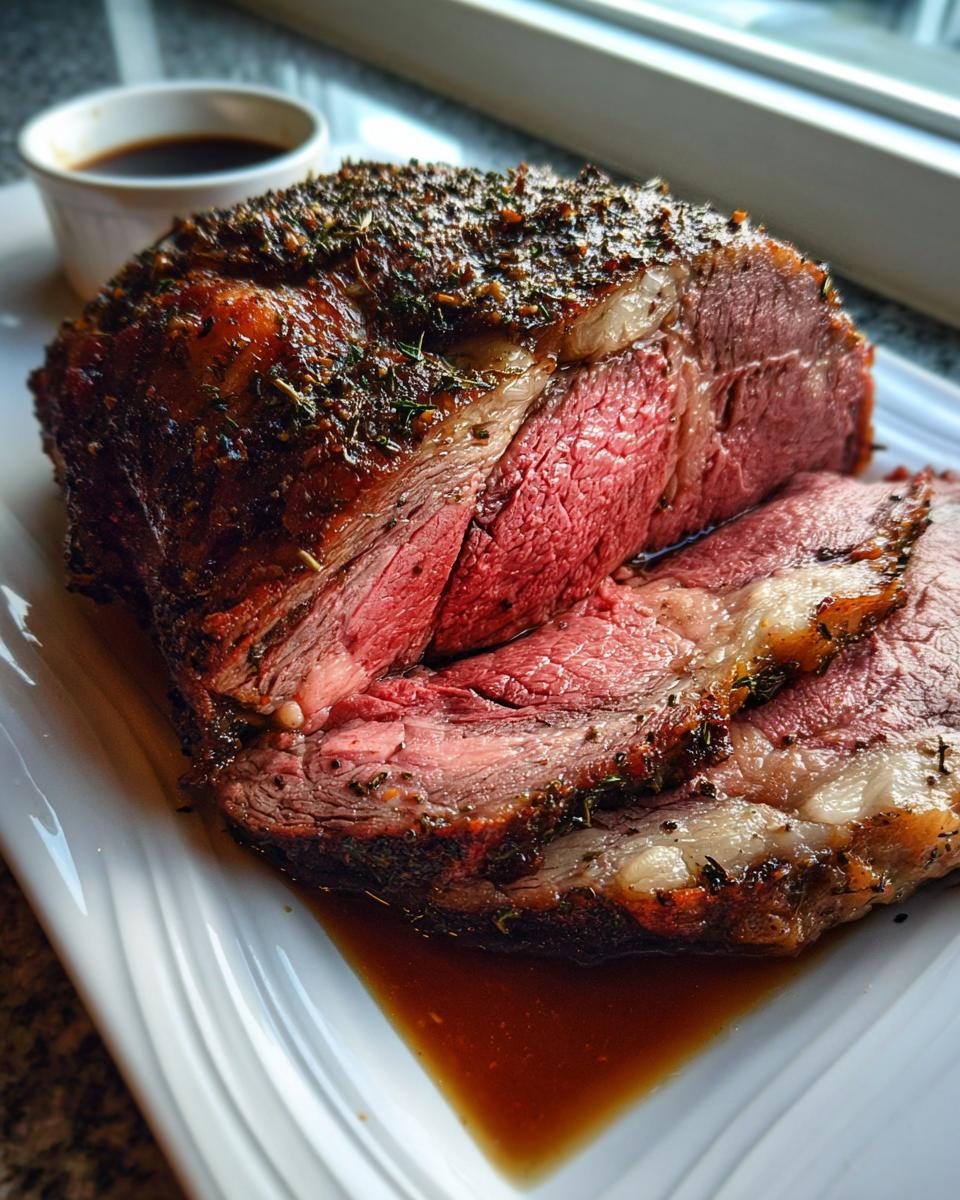
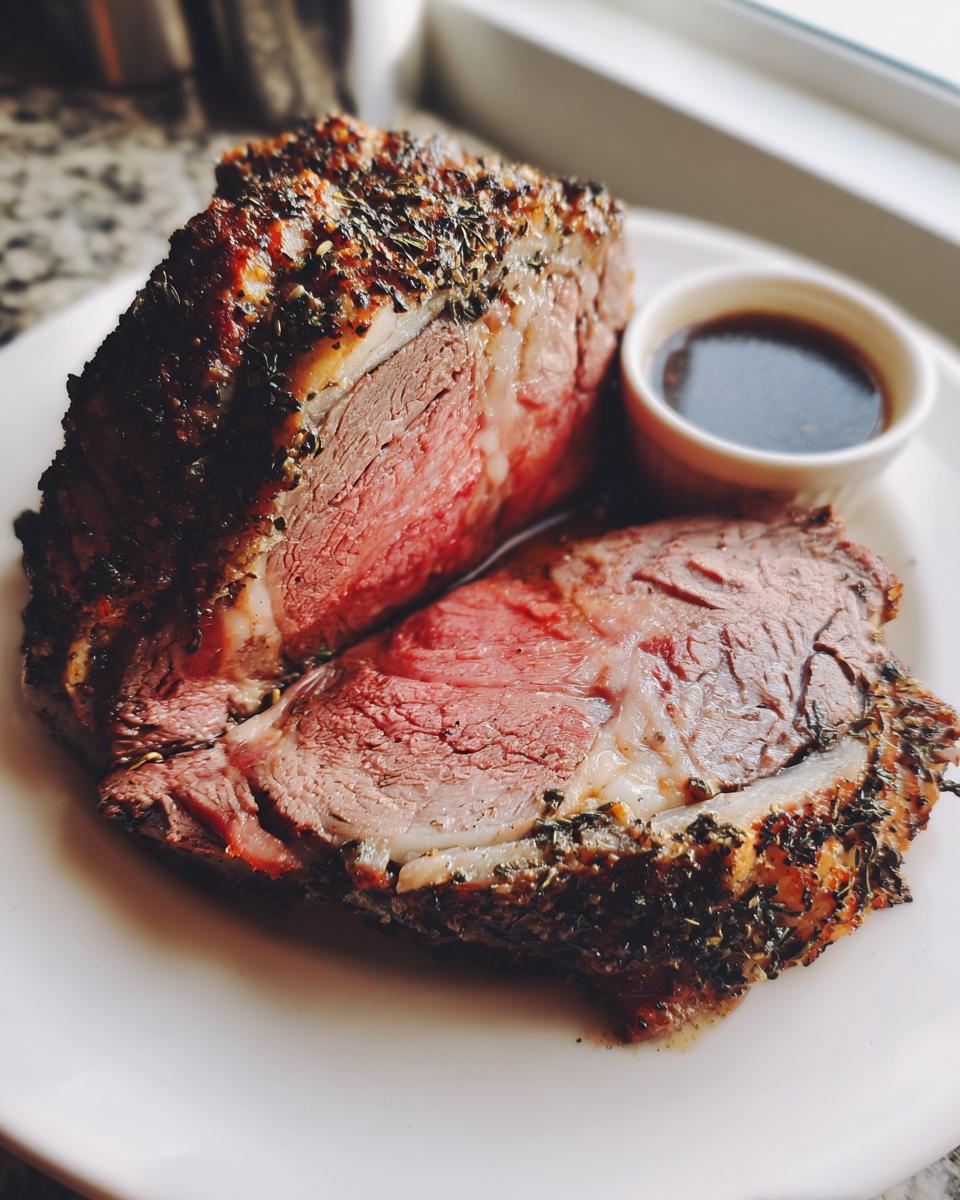
This step is non-negotiable for a juicy prime rib: REST IT for a minimum of 20 minutes, tented loosely with foil. Seriously, go pour yourself a glass of something while you wait. Once rested, pull out the roast and set it aside. Place that roasting pan right on the stovetop over medium heat. Add your beef broth and use a wooden spoon to scrape up all those brown, flavorful bits stuck to the bottom—that’s the foundation for your *prime rib with au jus*. Let it bubble for five minutes. If it’s not thick enough for your liking, whisk in that little cornstarch slurry and let it thicken up for another minute or two. Strain it, and you’re ready to serve with the slices!
If you want more ideas on managing cooking times for big dishes, sometimes I approach it like building out a party menu, kind of like how I plan things for my big holiday gatherings.
Tips for a No Fail Prime Rib Recipe Success
Listen, cooking a massive cut of beef shouldn’t feel like crossing your fingers and hoping for the best. This *no fail prime rib recipe* succeeds because we focus on the checkpoints, just like any good project. You must always measure by weight, not by eye, when planning your timing. For example, when you get a bone-in prime rib roast, calculate your cooking time based on the total weight of the roast, not just the number of ribs. If you’re planning ahead for a party, try the professional trick: sear it hot, then drop the heat way down to about 200°F (93°C) and let it cook slowly until it hits 120°F internally. Then, give it a final 10-minute blast at 450°F. It brings out that unbelievable flavor profile, similar to what you might get in a good pot of slow-cooked potato soup, but for beef!
Ingredient Notes and Substitutions for Your Prime Rib Recipe
Since this is the centerpiece of the meal, we have to be smart about the ingredients we choose. Look, you don’t need to shop at some specialty butcher for this prime rib recipe, but a few smart swaps make a huge difference between good and phenomenal. I always push for bone-in, and I’ll tell you why straight away.
The bone is your built-in insulation system. When you’re aiming for a true tender prime rib, having that bone structure around the meat helps moderate the temperature near the bottom of the roast. This means you get less of that gray, overcooked band right next to the bone. It just insulates slightly, leading to a more even overall cook, which is crucial for an impressive beef roast.
Now, let’s talk herbs. I’ve given you fresh rosemary and thyme because they are worth the effort—no substitute for that bright, earthy smell filling your kitchen! But if you’re strapped for time, you can convert this to dried herbs. Just remember the rule of thumb: dried herbs are more potent. For this exact ratio, use about 2 teaspoons of dried rosemary and 2/3 teaspoon of dried thyme to replace the fresh amounts listed. Integrate those dried herbs right into that spice mixture we talked about.
If you need quick, flavorful side dishes that pair well with this rich beef, I always turn to my recipe for garlic herb roasted veggies—they use similar flavor profiles, so it all ties together beautifully!
Serving Suggestions for Your Perfect Prime Rib Roast
So you’ve mastered the prime rib recipe and pulled out a magnificent, perfectly cooked roast. Congratulations! Now we need companions worthy of such a grand entrance. When you’re serving a rich, deeply flavored centerpiece like this, you want sides that are either creamy and comforting or bright and fresh to cut through that richness. Keep things simple here; you’ve already handled the major project!
For me, the side dish needs to be something I can manage while the roast is resting—which is why I love sides that can handle a little bit of downtime or go into the oven right after the roast comes out. We’re aiming for elegance without adding complexity to our plating process.
You absolutely cannot go wrong pairing this perfect prime rib roast with something starchy and luxurious. If you want guaranteed comfort, you have to make creamy potatoes. Seriously, ditch the stiff mashed potatoes and check out my recipe for creamy, silky garlic mashed potatoes. They take advantage of the oven time you already have going and they soak up that wonderful au jus like a dream.
If you want something green—which you should, to balance that incredible beef—I find that simple roasted vegetables work best. Avoid anything too fussy. Asparagus lightly tossed in olive oil and maybe a smash of lemon juice is fantastic. Or, if you want something a little heartier that still feels elevated, look toward roasted root vegetables like carrots and parsnips. The sweetness contrasts beautifully with the salty, herby crust of the beef.
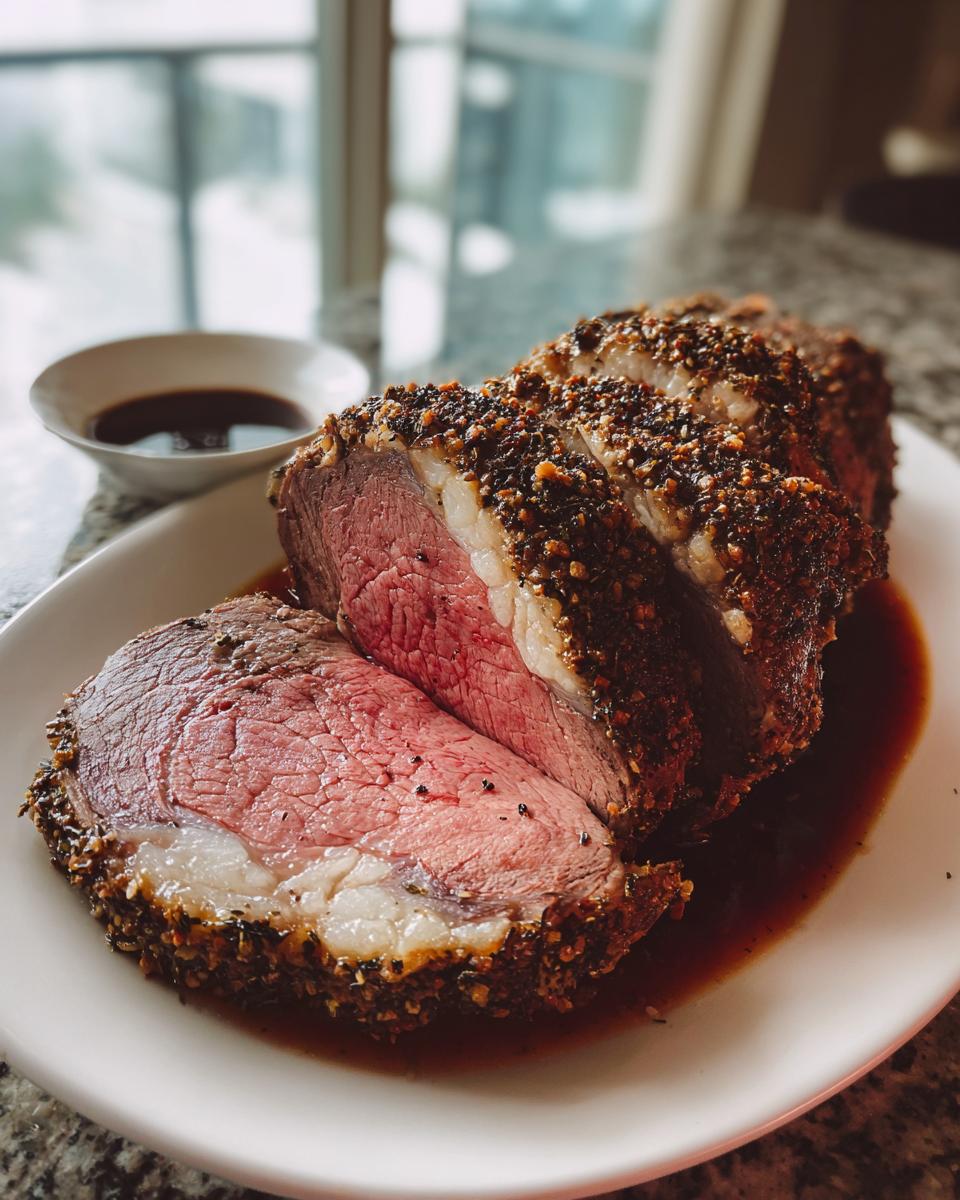
Remember, the beef is the star. The sides are the incredible backup singers. Keep them straightforward, reliable, and delicious. That’s the Dishicious way! When serving, slice the roast against the grain and make sure everyone gets a nice spoonful of that prime rib with au jus on the side of their plate.
Storage and Reheating Instructions for Leftover Prime Rib Recipe
Look, making an amazing prime rib recipe means you usually end up with leftovers, which is honestly the best part of a good holiday roast beef. But you can’t just microwave a thick slice of roast, or you’ll end up with dry, sad beef. We approach leftovers like any good optimization problem: maximum flavor preservation with minimum reheating energy.
My pro tip here is to slice the remaining roast immediately after you’ve finished enjoying the main meal. Storing it already sliced allows you to reheat smaller portions more efficiently later on. Keep those slices organized!
For storage, the absolute key is moisture. Place your slices into an airtight container. You want to toss the meat gently with a tablespoon or two of that leftover prime rib with au jus, or even some plain beef broth, just enough to coat it slightly. This seals in the existing juiciness before it chills. Store it in the fridge and try to use it within three days. That liquid coating acts like insurance against drying out.
When you are ready to reheat those precious slices, forget the microwave—it ruins steakhouse quality meat too fast. We are going low and slow in the oven. Set your oven temperature to a super gentle 275°F (about 135°C). Lay the slices in a baking dish that’s just big enough to hold them in a single layer. Pour a splash more of the saved au jus over the top—maybe another tablespoon. Cover that dish tightly with foil. This traps the steam and gently rewarms the meat without overcooking the exterior. It should only take about 10 to 15 minutes to warm through completely, depending on how thick your slices are.
If you need ideas for using up leftovers in a completely new way—maybe you don’t want straight roast beef sandwiches—you might want to check out different slow-cooked ideas, like my extremely easy slow-cooker BBQ chicken recipe; you can adapt that slow-cook sensibility for shredded beef tacos!
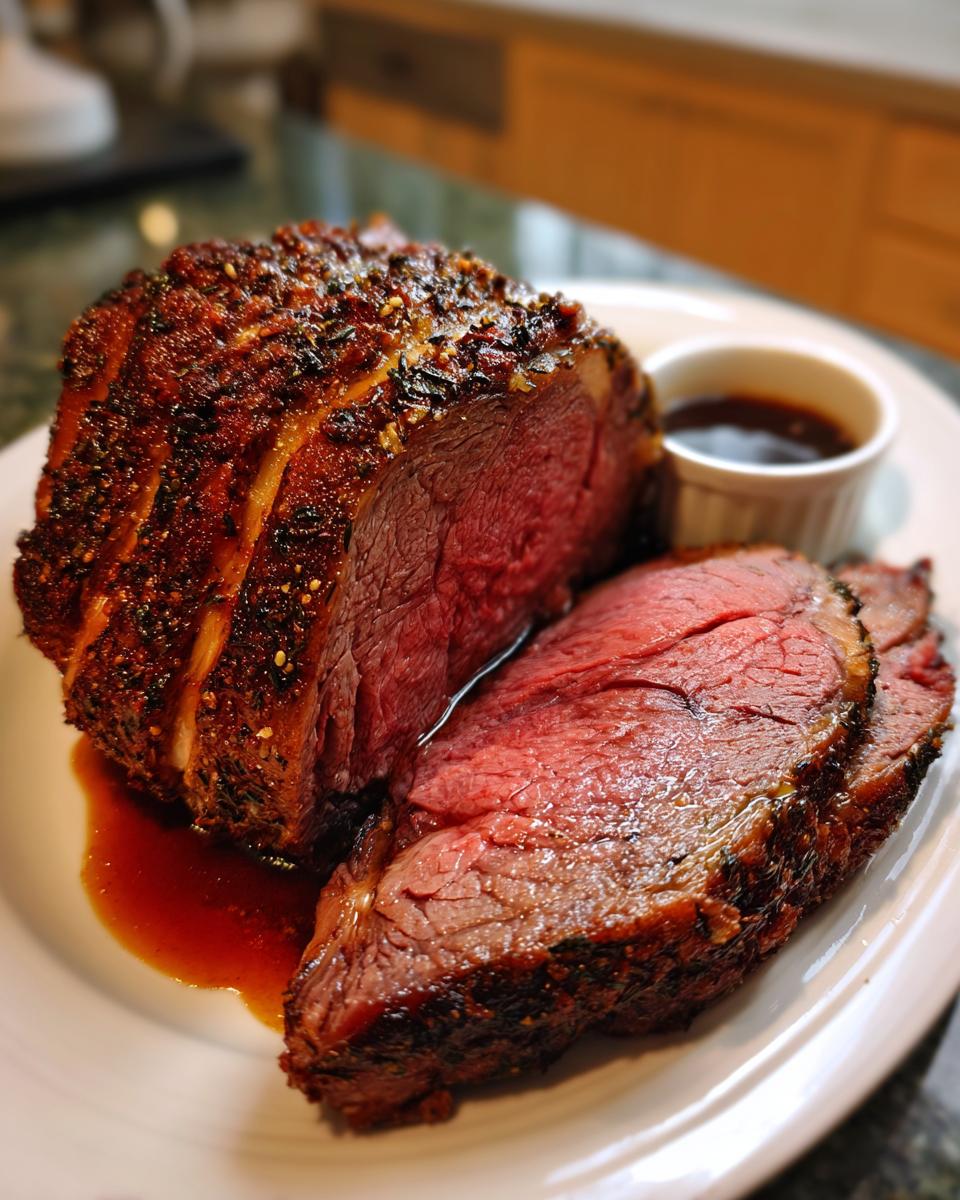
The goal here is simple: Treat those leftovers like they are gold, because they are. A properly stored and revived slice of this easy prime rib recipe tastes almost as good as the first time around!
Frequently Asked Questions About the Easy Prime Rib Recipe
Even with an optimized process like this prime rib recipe, sometimes you just have final logistical questions. That’s okay! I get it; dealing with a large, expensive roast can feel high-stakes. Here are the final clarifications I always keep in mind when planning our *holiday roast beef*.
What is the safe internal temperature for a prime rib recipe?
This is where your meat thermometer earns its keep. Since this is beef, we aren’t cooking it well-done; we pull it based on feel and temperature. For our medium-rare goal (which is the ultimate way to serve this impressive beef roast), you must pull the roast from the oven when the thermometer reads 125°F. Remember the key principle of carryover cooking! Once you tent that roast and let it rest, the internal temperature is going to creep up another 5 degrees, landing you perfectly at that delicious 130°F mark. If you want medium, aim for 130°F coming out. Any higher than that, and you start losing that signature tenderness.
Can I use a boneless cut for this prime rib recipe?
Yes, you absolutely can switch to a boneless cut, but you must adjust the timing in your initial calculation. Since the bone provides insulation, a boneless roast cooks faster, usually by about 10 to 15 minutes per pound compared to its bone-in counterpart. Because this recipe starts hot and then lowers the temp, the difference is noticeable. When using boneless, keep a very close eye on your prime rib cooking temperature guide settings and start checking the temp about 15 minutes earlier than the chart suggests for the bone-in weight. You still want that nice sear, so keep the initial 15 minutes at 450°F unchanged!
How do I prevent my roast from drying out when making a *holiday roast beef*?
If you follow this entire prime rib recipe, drying out shouldn’t be an issue, but if there is one thing you cannot skip, it’s the two bookends: tempering and resting. Tempering—letting it warm up on the counter for 2 to 3 hours—ensures the heat penetrates evenly, avoiding the dry outer ring. Resting, for at least 20 minutes, allows those muscle fibers to relax and reabsorb all the juices they released in the high heat. If you slice it immediately, all that flavor runs out onto the board instead of staying locked inside the meat. Those are my two essential rules for a guaranteed **tender prime rib**.
If you’re stressed about the whole main event, maybe you need a simple, crowd-pleasing appetizer to keep people happy while you manage the roast. My recipe for the ultimate seven-layer taco dip always takes the pressure off me!
Estimated Nutritional Data for This Prime Rib Recipe
Okay, now that we’ve nailed the preparation for this prime rib recipe, let’s briefly talk numbers. Since this is a massive roast destined for an epic holiday meal, you need to know what you’re working with. I want to be super clear—as a home cook optimizing for flavor, not a nutritionist—these figures are estimates based on the core ingredients we used for this 5-7 lb roast, assuming a 6-ounce serving size of cooked meat.
This is the kind of hearty dish that needs a lighter side, maybe something simple like my wild rice soup recipe if you’re looking for an alternative appetizer or side the next day! But for the roast itself, here’s the general breakdown:
- Serving Size: 6 oz cooked meat
- Calories: 450
- Fat: 30g (with about 12g saturated fat)
- Protein: 42g
- Carbohydrates & Sugar: Very low (1g carb, 0g sugar)
- Sodium: 450mg (Note: This depends heavily on how much kosher salt you use in your prime rib seasoning blend!)
Just keep in mind—this is an estimate for the meat and its crust. If you drown it in that rich au jus or load up on creamy sides, those numbers are going to climb fast! But as a standalone holiday roast beef, it delivers serious protein and flavor payoff.
PrintThe Ultimate Easy Herb-Crusted Prime Rib Roast with Au Jus
This is the best prime rib recipe for a tender, juicy holiday roast. Follow these simple steps for a perfect oven roasted prime rib every time, complete with a flavorful herb crust and simple au jus.
- Prep Time: 20 min
- Cook Time: 2 hr 30 min
- Total Time: 3 hr 10 min
- Yield: 6 servings 1x
- Category: Main Course
- Method: Oven Roasting
- Cuisine: American
- Diet: Low Fat
Ingredients
- 1 (5-7 pound) bone-in prime rib roast (about 2 ribs)
- 3 tablespoons olive oil
- 4 cloves garlic, minced
- 2 tablespoons fresh rosemary, chopped
- 1 tablespoon fresh thyme leaves
- 1 tablespoon kosher salt
- 1 teaspoon black pepper
- 1 teaspoon onion powder
- 1 teaspoon garlic powder
- 1/2 teaspoon paprika
- 1 cup beef broth (for au jus)
- 1 tablespoon cornstarch mixed with 2 tablespoons cold water (for slurry, optional)
Instructions
- Remove the prime rib roast from the refrigerator 2 to 3 hours before cooking to allow it to come closer to room temperature. Preheat your oven to 450°F (232°C).
- Prepare the herb crust: In a small bowl, combine the minced garlic, chopped rosemary, thyme, kosher salt, black pepper, onion powder, garlic powder, and paprika. Mix well.
- Pat the entire surface of the prime rib roast dry with paper towels. Rub the olive oil evenly over the roast.
- Press the herb and spice mixture firmly onto all sides of the roast, creating an even coating.
- Place the roast, fat side up, on a roasting rack set inside a sturdy roasting pan. Do not add any liquid to the pan yet.
- Sear the roast: Place the pan in the preheated 450°F oven and roast for 15 minutes. This sets the crust.
- Reduce the oven temperature to 325°F (163°C) without opening the door. Continue roasting until the internal temperature reaches your desired doneness (use a meat thermometer inserted into the thickest part, avoiding bone). For medium-rare, aim for 125°F (52°C). This usually takes about 13-15 minutes per pound after the initial sear.
- Remove the roast from the oven when it is 5 degrees below your target temperature. Transfer the roast to a cutting board and tent it loosely with foil. Let it rest for at least 20 minutes. This resting period is essential for a juicy prime rib.
- Prepare the au jus: Place the roasting pan (with drippings) over medium heat on the stovetop. Scrape up any browned bits from the bottom of the pan. Add the beef broth. Bring to a simmer and cook for 5 minutes, stirring occasionally.
- If you prefer a thicker sauce, whisk in the cornstarch slurry and simmer until the au jus thickens slightly. Strain the au jus into a serving pitcher.
- Slice the rested prime rib against the grain and serve immediately with the warm au jus on the side.
Notes
- For a bone-in prime rib roast, calculate cooking time based on the weight of the roast, not just the number of ribs.
- If you prefer a restaurant-style prime rib, you can sear the roast first, then cook it low and slow at 200°F (93°C) until it reaches 120°F (49°C), then increase the heat to 450°F (232°C) for a final 10-minute blast to crisp the exterior.
- Use a reliable meat thermometer; this is the key to a no fail prime rib recipe.
Nutrition
- Serving Size: 6 oz cooked meat
- Calories: 450
- Sugar: 0
- Sodium: 450
- Fat: 30
- Saturated Fat: 12
- Unsaturated Fat: 18
- Trans Fat: 0
- Carbohydrates: 1
- Fiber: 0
- Protein: 42
- Cholesterol: 140